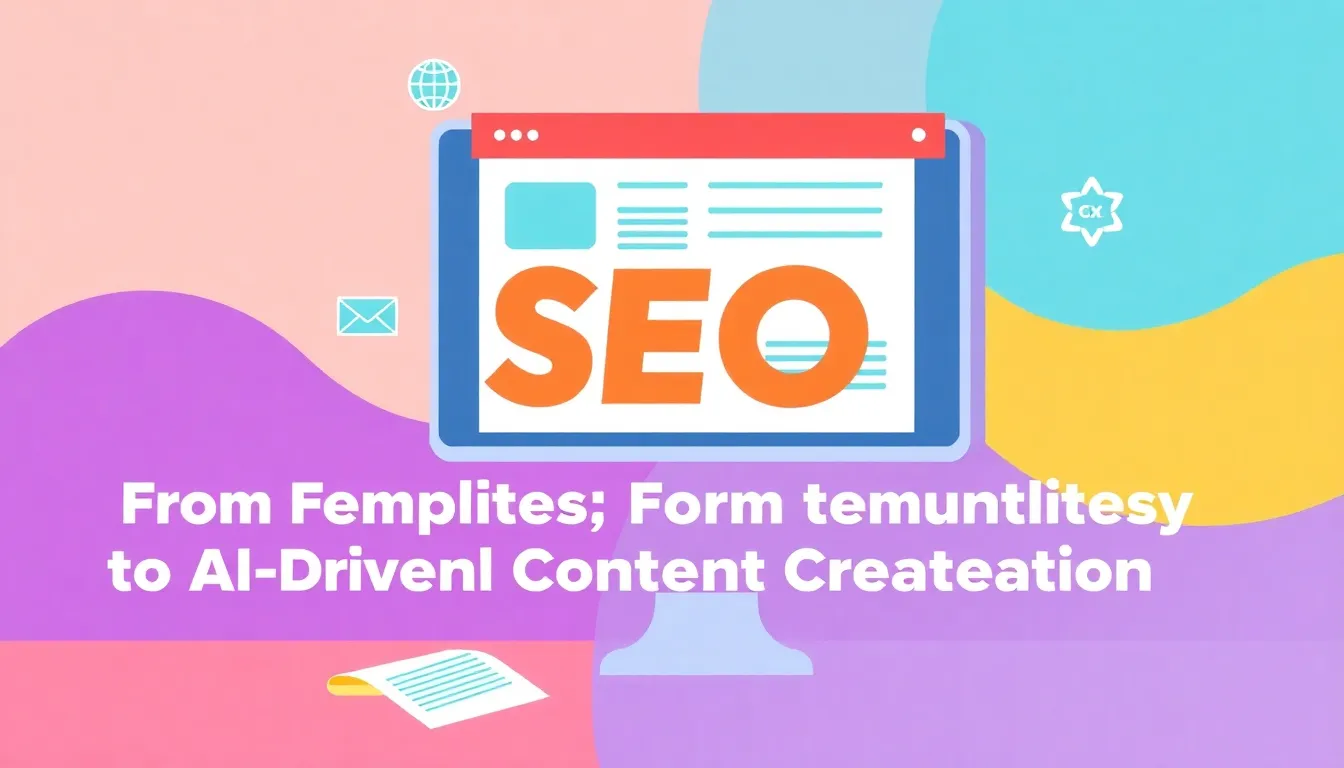
Modern SEO Strategy: From Templates to AI-Driven Content Creation
The Evolution Beyond Template-Based SEO
Traditional programmatic SEO has earned a reputation for producing low-quality, duplicate content that simply swaps city names or keywords in static templates. However, modern search engines demand more sophisticated approaches that prioritize meaning over mechanical substitution. The new paradigm focuses on understanding user intent and context rather than keyword density. For instance, someone searching for hotels in Las Vegas has entirely different priorities than someone looking for accommodations in Orlando. Vegas travelers prioritize nightlife and luxury amenities, while Orlando visitors focus on family-friendly features and theme park accessibility. This shift requires AI tools integration to analyze search patterns and create genuinely unique content that addresses specific user needs. By leveraging artificial intelligence to understand semantic relationships and contextual nuances, businesses can scale content production while maintaining quality and relevance. The goal transforms from creating thousands of similar pages to generating thousands of unique solutions that serve distinct search intents within a scalable technical framework.

Building Authority Through Data-Driven Mapping
Successful semantic SEO begins with understanding where your domain has permission to rank, rather than blindly targeting high-volume keywords. This approach involves analyzing Google Search Console data to identify existing topical authority and opportunities for expansion. The authority mapping process starts with clustering topics based on actual performance data, revealing which subjects the domain already dominates and where gaps exist. Smart implementation focuses on strengthening established authority areas first, using programmatic scaling surgically rather than broadly. For example, if data shows growing authority in mortgage-related content, that becomes the priority for scaled expansion. AI Post Images Generator tools can enhance this content with relevant visuals that support the semantic context of each topic cluster. This methodology transforms programmatic SEO from speculation into strategic territory defense and expansion. By connecting SEO strategy with calendar planning and seasonal trends, brands can anticipate content needs and prepare scaled responses. The result is a systematic approach that builds on proven strengths while systematically filling content gaps that serve real user needs.
Maintaining Brand Consistency at Scale
The biggest challenge in AI-powered content creation is preventing brand dilution and factual hallucinations across hundreds of generated articles. Enterprise companies need robust governance systems that ensure every piece of content aligns with brand voice and accuracy standards. The solution involves creating comprehensive context layers that guide AI generation beyond simple prompts. This includes embedding brand persona guidelines, negative constraints that prevent off-brand language, and proprietary data that isn’t available in standard AI training sets. Auto Backlinks Builder systems can support this approach by creating semantic connections between related content pieces, strengthening topical authority while maintaining brand coherence. Effective governance centralizes brand guidelines in digital formats that feed all AI agents consistently. This systematic injection of brand context prevents generic-sounding content while scaling personalized communication. The architecture must include quality checkpoints and feedback loops that continuously refine AI output based on performance data. By treating brand consistency as a technical challenge rather than a creative limitation, organizations can achieve both scale and authenticity in their content strategies.